Form 5472 Recordkeeping Checklist
Keep records that trace every Form 5472 related-party total to a source document. Download a clearly hypothetical owner-transfer ledger example.

Form5472 Prep
Reviewed filing guidance for foreign-owned LLCs
Plain English
No dense tax-code language
Actionable
Clear next steps and deadlines
Current
Last updated September 11, 2026
A Form 5472 workpaper should let a reviewer trace each reported related-party amount back to a source document and explain what the transfer was. Keep entity records, party identification, a transaction ledger, underlying documents, and the exact filing package together. Bank statements alone may not explain a transfer's counterparty, purpose, or classification.
The IRS instructions for Form 5472 require permanent books of account or records sufficient to establish the correctness of the federal return, including records relevant to related-party treatment. Failure to maintain required records can carry the same $25,000 penalty framework as a filing failure.
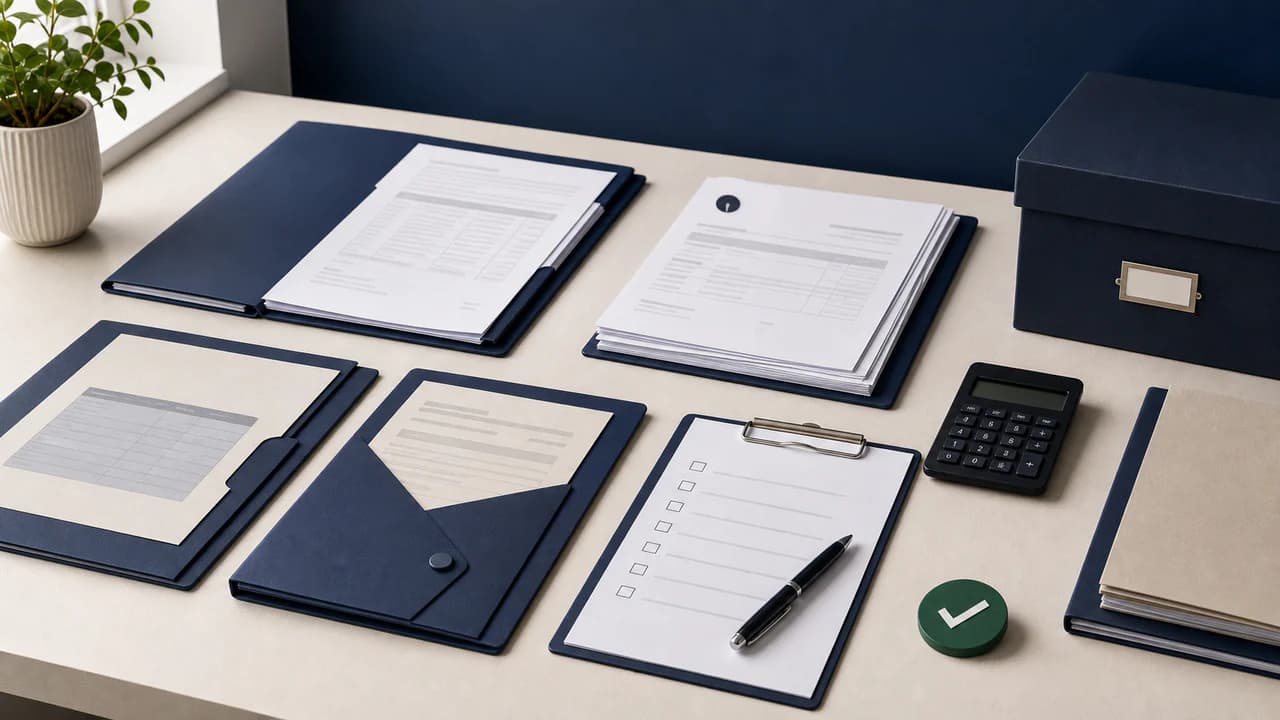
Build a five-folder year-end packet
- Entity: EIN notice, formation documents, ownership records, addresses, and the workpaper supporting line 1c total assets.
- Owner and related parties: legal names, addresses, countries, FTINs if any, and a consistent reference ID where applicable.
- Transactions: LLC bank statements, owner-account statements showing the transfer, payment-platform exports, and a running ledger.
- Support: invoices, receipts, reimbursement reports, loan notes, interest schedules, and noncash valuation support.
- Filing: final Form 5472, pro forma Form 1120, any required attached transaction descriptions, Form 7004 if used, and mailing or fax evidence for the exact submitted package.
The key test is simple: every reported total should trace to a schedule, and every schedule line should trace to source evidence.
Keep an owner-transfer ledger
Use a ledger with the date, sender, recipient, source amount and currency, USD conversion method where relevant, category, purpose, document reference, and reviewer note. Do not leave “transfer” as the final category. “Owner contribution for operating cash” and “repayment of owner-loan principal” describe materially different facts.
Download the hypothetical example ledger. It contains invented names, dates, amounts, document labels, and classifications—no customer or filing data. It is a transparency example, not an IRS form, tax advice, or a determination that its sample items belong in any particular Form 5472 part or line. Replace every sample field with your own records and obtain advice for uncertain classifications.
Reconcile the example without netting away transactions
The sample is a hypothetical full-calendar-year planning example, including an October transaction. All amounts are already in USD, so the exchange-rate multiplier is 1. It shows three separate evidence groups:
| Evidence group | Sample entries | USD total |
|---|---|---|
| Cash received from the owner | $2,500 contribution + $1,000 loan | $3,500.00 |
| Cash paid to the owner | $84.50 reimbursement + $300 distribution | $384.50 |
| LLC cost initially paid outside its bank account | Owner's $84.50 software payment | $84.50 |
The two cash groups explain a $3,115.50 net increase in the LLC's bank balance from these sample transfers alone. That net movement is not the Form 5472 reportable total. Preserve the separate amounts, including the owner-paid cost that never appeared as a payment from the LLC bank. Classify the original payment and subsequent reimbursement consistently with the records; do not silently erase both because they offset economically.
Match each entry to the named source document, resolve any loan or contribution uncertainty, and only then map the categories to the applicable form and statement. For gaps in the source file, use the reasonable-estimates guide rather than inventing missing figures.
How long should records be kept?
The IRS instructions say to retain books and records for as long as their contents may become material in administering federal tax law. That can be longer than a generic three-year rule. Keep filed packages and delivery evidence with the underlying transaction records for as long as they can affect an open year, a related-party balance, basis, a loan, or a later inquiry. A qualified adviser can set a retention policy for the LLC's actual facts.
Preserve delivery evidence without overstating it
Keep the package copy, any fax-provider transmission report, or mailing evidence together. A fax-provider report is evidence of the provider-reported transmission details; it is not an IRS determination that the package was complete, matched, processed, or accepted. See what a Form 5472 fax receipt does and does not show.
Frequently asked questions
Do I attach bank statements to Form 5472?
Generally, retain them as support rather than attaching every source record. The required form and attachments depend on the transaction facts.
Are screenshots enough?
Screenshots can supplement a file, but downloadable statements, exports, invoices, and transaction confirmations more reliably preserve date, parties, amount, and context.
Do I keep records for unrelated customer sales?
Keep ordinary accounting records for all business activity. Separately identify related-party transactions in the Form 5472 workpaper.
Is a fax receipt proof that the form was correct?
No. Keep it as transmission evidence with the exact package, schedules, and source records; it is not proof of substantive correctness or IRS processing.
The bottom line
Good records create a chain from source document to ledger to reported amount. Build the packet before the deadline, then see current Form5472 Prep options if you want help with the supported filing workflow.
Educational content only; not tax or legal advice.