Form 5472 Address: Business vs Foreign Owner Address
Use the correct Form 5472 and pro forma 1120 addresses. See principal-office, registered-agent, C/O, and foreign-owner rules.

Form5472 Prep
Reviewed filing guidance for foreign-owned LLCs
Plain English
No dense tax-code language
Actionable
Clear next steps and deadlines
Current
Last updated August 25, 2026
The pro forma Form 1120 should show the LLC’s principal office or place of business, not the registered agent’s address merely because the agent appears on the state record. Form 5472 Part I identifies the reporting LLC, while Part II uses the foreign owner’s real address. A valid C/O mailing address requires careful labeling.
Three addresses can exist at once: the LLC’s principal business address, a mailing address in care of a third party, and the foreign owner’s residential or entity address. They are not interchangeable.
For a consistent reviewed package, start the Form 5472 filing. For the rest of the cover page, see our 1120 pro forma instructions.
Which address goes on the pro forma Form 1120?
The 2025 Instructions for Form 1120 say to enter the corporation’s principal office or place of business and specifically say not to use the registered agent’s address for the state of incorporation.
For a foreign-owned disregarded LLC operated entirely from the owner’s home office abroad, the principal place of business can be a foreign address. The Form 1120 instructions explain how to enter city, state or province, country, and foreign postal code and instruct filers not to abbreviate the country name.
If mail is genuinely received in care of an accountant, attorney, or another third party, the instructions permit “C/O” followed by the third party’s name and address. A C/O mailing arrangement does not turn the third party’s office into the LLC’s operating location.
Which address goes on Form 5472?
Part I line 1a identifies the reporting corporation or foreign-owned US disregarded entity. The Form 5472 instructions require the complete address and provide a specific order for foreign addresses.
Part II line 4a identifies the direct foreign owner. Enter the owner’s actual foreign residential address for an individual or the foreign entity’s real address for a company. Do not repeat the LLC’s US registered-agent address in the owner field unless it is genuinely the owner’s address, which is uncommon.
| Document or field | Address purpose | Common mistake |
|---|---|---|
| Pro forma 1120 name/address | LLC principal office or place of business | Using the state registered agent automatically |
| Form 5472 Part I line 1a | Reporting LLC address | Inconsistent address with no explanation |
| Form 5472 Part II line 4a | Direct foreign owner’s address | Copying the LLC or agent address |
| C/O mailing line | Mail received through a third party | Treating C/O as the business’s physical operations |
| Form 8822-B | Later business address or responsible-party change | Assuming the annual filing updates every IRS system |
Can a virtual mailbox be the business address?
A virtual mailbox can be a mailing location, but whether it is the LLC’s principal office depends on the facts. A mail-forwarding address with no business activity should not be presented as an operating office merely to make the form look domestic.
Use an accurate principal place of business and label a separate mail-receipt arrangement with C/O where appropriate. Banks, state filings, the EIN record, and tax forms can legitimately contain different address functions, but unexplained inconsistencies increase the chance of rejected mail or identity-verification problems.
What if the LLC has only a registered agent?
Identify where the business is actually directed and operated. For a solo consultant working from Italy, Spain, or Japan, that may be the owner’s foreign office. If the LLC has no active operations, use the best factual principal-office address and document the reasoning rather than defaulting automatically to the agent.
The state registered agent remains important for legal service and state good standing. It simply does not become the federal principal-office address solely by being listed on the formation certificate.
Our FTIN, reference-ID, and foreign-address guide covers formatting of the owner’s Part II fields.
How should address consistency be checked?
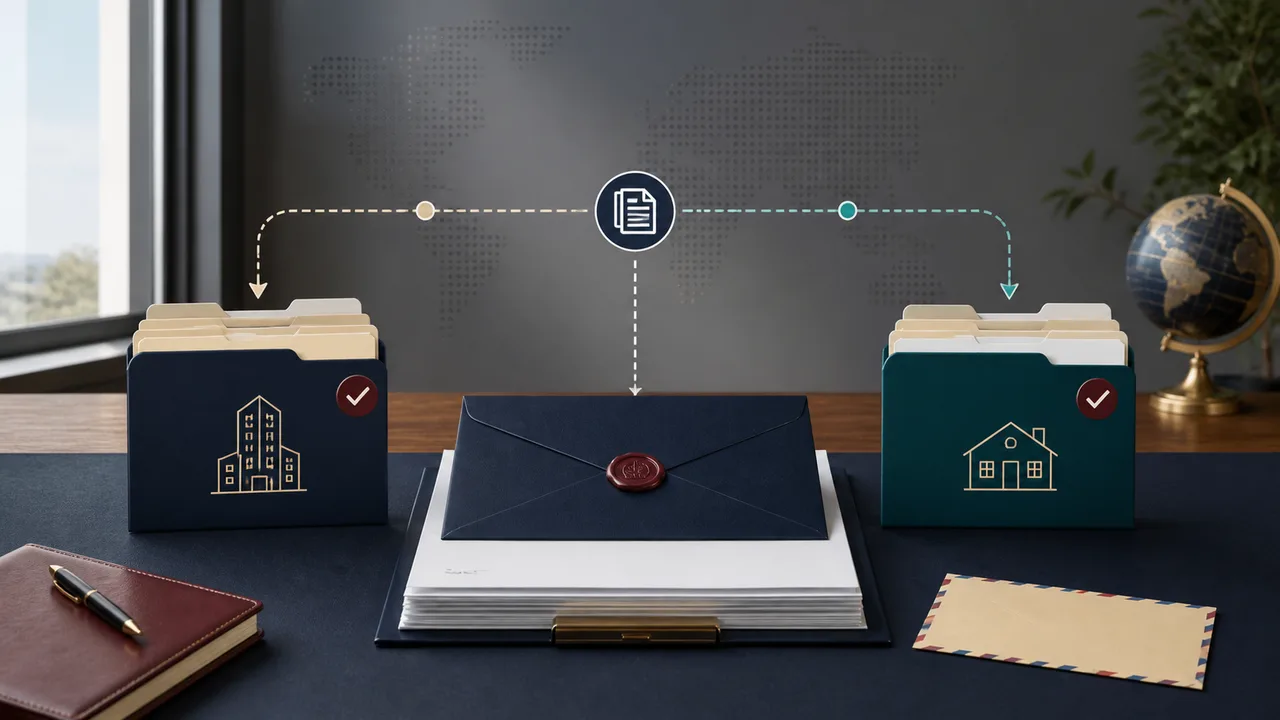
Use a four-role address matrix before preparing the forms:
- Principal office: where the LLC’s business is directed or carried on.
- Mailing/C/O address: where reliable tax correspondence is received.
- Registered-agent address: where state legal process is served.
- Foreign-owner address: where the individual owner resides or the foreign entity is located.
Then compare the EIN confirmation, prior-year return, state record, bank profile, and current filing. Differences are not automatically wrong, but each should have a factual explanation.
How do you update and file the addresses?
- Confirm each address role. Do not begin by copying the state formation record.
- Use the true LLC name and principal address on the pro forma Form 1120. Add C/O only when mail is actually received through that party.
- Complete Form 5472 Part I consistently. Follow the IRS foreign-address order when applicable.
- Enter the owner’s real address in Part II. Keep the owner’s address separate from the LLC and agent.
- Mark an address change when the form requires it. If the change occurs after filing, the IRS instructs businesses to use Form 8822-B where applicable.
- Keep delivery records. Retain the signed package and IRS fax or mailing evidence at an address the owner can access.
Form5472 Prep checks identity and address consistency, prepares the filing and statements, arranges accountant review, and returns a timestamped IRS fax receipt.
Frequently asked questions
Can I use my registered agent’s address on Form 1120?
Not merely because it is on the state record. The Form 1120 instructions require the principal office or place of business and specifically reject automatic use of the registered-agent address.
Can a foreign address appear on the pro forma Form 1120?
Yes. The Form 1120 instructions provide a format for foreign addresses. Enter the city, province or state, country, and postal code using the country’s practice.
What address goes in Form 5472 Part II?
Use the direct foreign owner’s actual address. For an individual, that is generally the residential address; for a foreign entity, use the entity’s own address.
What does C/O mean on a tax return?
C/O means the LLC receives mail in care of the named third party. It does not by itself establish that the third party’s office is the LLC’s principal place of business.
How do I notify the IRS after an address change?
The Form 1120 instructions point businesses to Form 8822-B for a change in business address or responsible party occurring after the return is filed.
Treat principal office, mailing, registered-agent, and owner addresses as four separate roles. Start a reviewed Form 5472 package, or review the pro forma Form 1120 guide.